A sales process step doesn't end when you finish it. It ends when the buyer does.
Gartner counts six buying jobs. Salesforce names seven steps. HubSpot names seven different ones. Pipedrive names nine. LinkedIn's own page names five in one place and eight in another. The step count isn't the problem. None of the vendor steps end on something the buyer produced.
 Toni MedicSalestructSeptember 30, 202612 min readSales Operations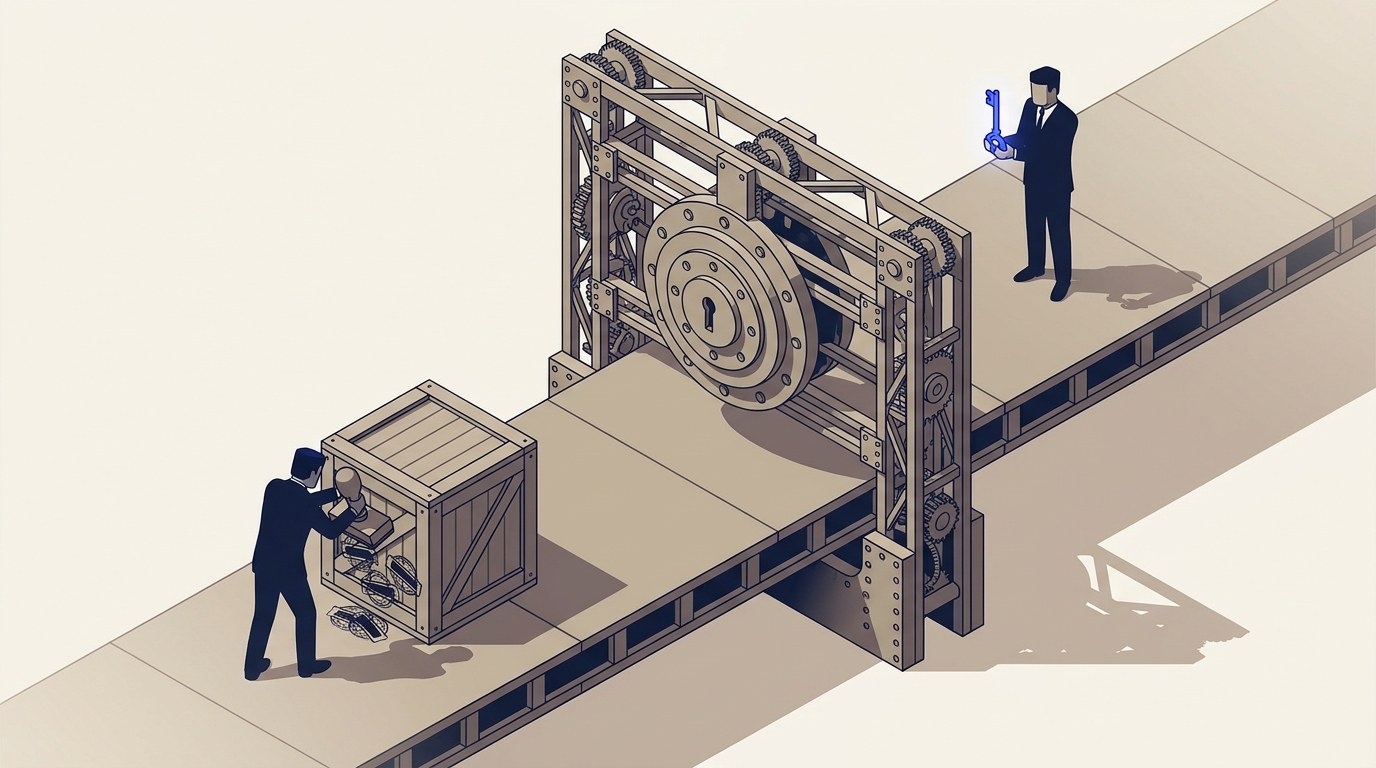
Open five different sales-process pages from five different vendors and you'll get five different step counts. That's not the interesting part. The interesting part is that almost every step on every one of those lists is named after something a rep did, not something a buyer confirmed. A step a rep can complete alone isn't a checkpoint. It's a task.
What is a sales process?
A sales process is the fixed sequence of steps a deal moves through between first contact and a signed contract, with a defined action and a defined exit condition at each one. The sequence is supposed to be repeatable across reps and deals. In most CRMs it's also the thing a forecast is computed from, which is the part that goes wrong: if a step's exit condition is something the seller did, the forecast is measuring seller activity and reporting it back as buyer intent.
The short version
- Vendors don't agree on how many steps a sales process has. Gartner names six buyer "jobs," Salesforce and HubSpot each name seven (different sevens), Pipedrive names nine, and LinkedIn's own site names five stages in one section and eight in another.
- Gartner's research describes B2B buying as non-linear: buyers loop back across the same six jobs more than once, rather than moving through them in order.
- Salesforce's own guidance asks "Do you have clear exit criteria in place for each step of the sales process?" and then names seven steps that are all seller activities, with no exit criteria attached to any of them.
- A step is only a real checkpoint when its exit condition is a fact the buyer produced, not an action the seller completed. "Proposal sent" and "presentation delivered" describe what the seller did regardless of how the buyer responded.
- Six steps, each with one buyer-produced fact as its exit test, is enough to run a forecast that means what it says.
Why the vendors don't agree on the count, and why that's not the real problem
Here's what five sources actually say, checked directly against each one rather than against a summary of them.
Gartner doesn't publish a numbered "process" at all. Its research on B2B buying describes six "buying jobs" that customers work through, and it's explicit that they don't run in order: buyers loop back across the six jobs more than once during a single purchase, revisiting problem identification, solution exploration, requirements building, supplier selection, validation and consensus creation as new information changes what they need to confirm.
Salesforce names seven steps on its sales-process page: build product knowledge, create a buyer persona, prospecting, lead qualification and discovery, make your sales pitch, negotiation and closing, and nurture the relationship and upsell. Every one of them is something a rep does. The same page also asks, as a self-check question for the reader: "Do you have clear exit criteria in place for each step of the sales process?" It's a good question. Salesforce's own seven steps don't answer it, because none of them names a fact the buyer has to produce before the deal can move.
HubSpot names a different seven: prospect, connect and qualify, research, pitch, handle objections, close and, in its own phrasing, "nurture and continue to sell." Same defect. "Pitch" and "close" describe what the rep does in the room, not what the buyer decided.
Pipedrive goes further and names nine stages, from generating new leads through presenting a solution and negotiating objections to winning the deal and generating referrals. Every stage is written from the seller's side of the interaction, including "setting your initial appointment/meeting," which can be checked off the moment a calendar invite is accepted, with no confirmation that the buyer intends to move further.
LinkedIn's sales-terms page is the clearest sign that the count itself doesn't matter: the top of the page summarizes the sales process as five stages (prospecting, qualifying, presenting, negotiating/closing, following up), and a lower section on the same page lists eight instead: lead generation and prospecting, qualification, outreach, needs analysis, presentation/proposal, negotiation/closure, follow-up/onboarding/retention, and customer success management. One page, two counts, no acknowledgment that they disagree.
Checked directly against each publisher's own page, 29 September 2026. Full wording and URLs in the sources block below.
Five step counts from five credible publishers, and not one disagreement is really about counting. Salesforce and HubSpot both land on seven and still disagree with each other about what those seven are, because "how many steps" was never the question that mattered. The question is whether a step ends on something the buyer did, and by that test every vendor list above fails the same way.
Do you have clear exit criteria in place for each step of the sales process?
Salesforce asks the right question and then doesn't answer it with its own seven steps. That gap is the whole argument of this piece.
The six steps, defined by what the buyer has done
This is one way to run it, not the only way, and it assumes a considered sale with more than one stakeholder. A transactional, single-call sale won't need all six. Adjust the count to your deal, but keep the rule: every step ends on a fact the buyer produced, not a task the seller finished.
- Problem confirmed
The buyer has said, in their own words, what the unsolved problem is costing them. Not "attended a discovery call." A sentence you could paste into a CRM note: "we're losing about 40 hours a month reconciling exports by hand." The seller-activity version of this step is "discovery call held," which can be true with a buyer who never named a cost.
- Requirements named
The buyer has sent something in writing (an email, a shared doc, meeting notes they added to) listing the specific capabilities the solution has to have, in their own language. The seller-activity version is "needs analysis complete," which records that the rep ran an exercise, not that the buyer confirmed anything.
- Economic buyer engaged
The person who owns the budget has been on a call or in the room, not summarized secondhand by a champion. The seller-activity version is "champion identified," which can be true for months while the actual budget holder has never heard of the deal.
- Proof accepted
The buyer has confirmed, specifically, that something (a reference call, a pilot, a case study) answered the requirement they named in step 2. Not "case study sent." The exit fact is the buyer's confirmation that it landed, in an email or on a recorded call, not the seller's record of having sent it.
- Commercial terms agreed
Price, scope and start date have been confirmed by the buyer, in writing or on a recorded call, before legal drafts anything. The seller-activity version is "proposal sent," a default stage name common enough in CRM pipelines that it barely needs an example, and it records an outbound action regardless of whether the buyer ever responded to it.
- Signed and using it
Signature received, and the buyer has taken a first real action inside what they bought: logged in, attended a kickoff, run the first workflow. A signature alone can still reverse before use starts. "Closed won" the moment ink dries treats those two facts as one, and they aren't.
A worked example: the same deal, six exit facts
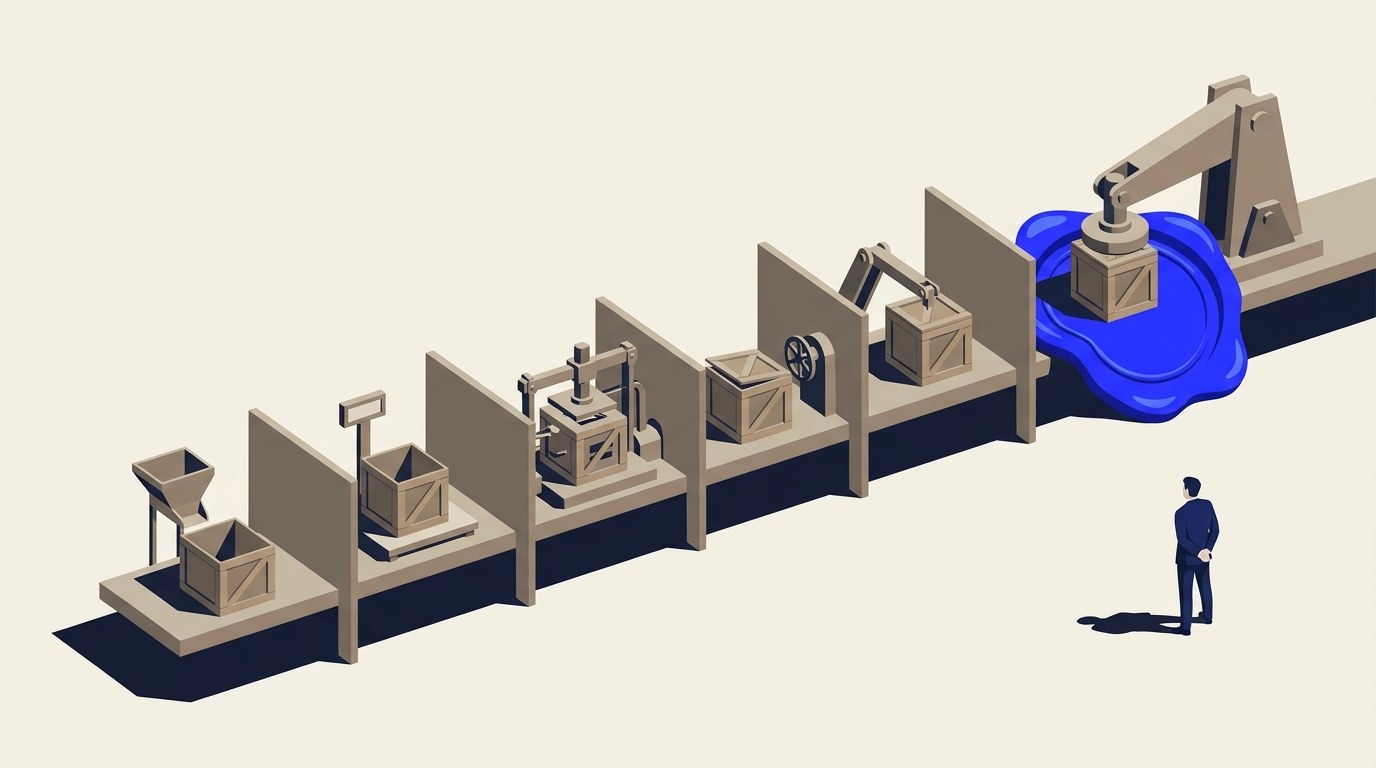
| Step | What's true | Where it's recorded |
|---|---|---|
| 1. Problem confirmed | Buyer said, on the call recording, they're "losing about 40 hours a month" reconciling exports by hand | Quoted in a CRM note tied to the contact |
| 2. Requirements named | Buyer emailed a two-line list: needs SOC 2, needs a native Salesforce sync | Email attached to the deal record |
| 3. Economic buyer engaged | CFO joined the second call and asked about the implementation timeline | Call recording; contact role field set to "economic buyer" |
| 4. Proof accepted | Buyer replied that the reference call "answered the SOC 2 question" | Email quoted in deal notes |
| 5. Terms agreed | Buyer confirmed the 24-seat price and a March 1 start date on a recorded call | Recording timestamp logged against the deal |
| 6. Signed and using it | Contract signed Feb 14; buyer's admin logged in and built the first workflow Feb 20 | E-signature record plus a product login event |
Every row is a fact you could show a skeptical VP of sales without paraphrasing it. None of them are things the rep decided on their own.
Sales process, sales methodology, sales pipeline: not the same thing
These three get used interchangeably and they answer different questions.
A sales process is the "what": the fixed sequence of steps and the exit test for each one, covered above.
A sales methodology (MEDDIC, SPIN, Challenger and similar frameworks) is the "how": the technique a rep uses to execute any single step well, especially discovery and qualification. A methodology doesn't replace a process. It's what a rep does inside step 1 or step 3 to get to the exit fact faster.
A sales pipeline is the CRM's live view of where every open deal sits against the process, plus the forecast math built on top of it. If the pipeline's stage names are seller activities, the forecast inherits the same defect described above: it's weighting deal value by what the rep did, not by what the buyer confirmed. That's covered in more depth in CRM pipeline stages: give every one an exit criterion.
Common mistakes
- Naming steps after what the rep did. "Demo delivered" and "proposal sent" are two of the most common offenders in default CRM pipelines, and both can be true with a buyer who never engaged.
- Treating "sent" as an exit test. A document or an email being sent is an action with no buyer response attached. The exit fact is what the buyer did after receiving it, not the sending itself.
- No required field tied to the stage change. An exit criterion that lives on a wiki page nobody opens isn't enforced. It has to be a field the CRM can check before a deal is allowed to move.
- Adding steps for the sake of granularity. Pipedrive's nine stages and Salesforce's seven both include steps that don't add a distinct buyer-produced fact. A step without one is friction dressed as rigor, not more control.
- Running one process for every deal size. A self-serve deal and a multi-stakeholder enterprise deal won't produce the same requirements or need the same economic-buyer step. Forcing both through one template hides which parts are actually slowing the enterprise deal down.
Frequently asked questions
Common questions
Sources
Gartner, The B2B Buying Journey: Key Stages and How to Optimize Them (2026)
Salesforce, How to Build a Sales Process: 7 Steps to Follow (2026)
HubSpot, How to create a sales process that drives results, directly from a sales pro (2025)
All 5 sources and how they were checked
Pipedrive, 9 Essential Sales Stages for Effective Sales Cycle Management (2026)
LinkedIn Business, Sales Process (2026)
If you want a second pair of eyes on your own setup, Salestruct runs a free diagnostic.
Read next.
All articlesCRM pipeline stages: give every one an exit criterion
Your CRM ships with stages named after things your rep did, and it multiplies your forecast by a number attached to each one. Booking a presentation does not make a deal 60% likely to close, but that is what the default pipeline asserts.
Sales infrastructure: the rules layer nobody builds
Companies without a dedicated ops person usually own the tools and improvise everything between them. The list is bought, the CRM is bought, the sending tool is bought, and the rules that connect the three live in someone's head, which is the part that breaks when that person is on holiday.