What is conversation intelligence?
It records sales calls, transcribes them, and turns them into trackers, scores and CRM updates. What it actually captures, what it costs across seven vendors, and what to tell the prospect before you hit record.
 Toni MedicSalestructOctober 8, 202612 min readModern Stack & AI



Conversation intelligence is call recording plus a layer of analysis: it transcribes the call, matches it against rules or AI models to flag what was said, scores the interaction, and writes the result back into the CRM. This is what that layer actually captures, what the main platforms charge for it, and the one sentence you owe the person on the other end of the line before you turn it on.
The short version
- Conversation intelligence is not call recording. Recording keeps the audio; conversation intelligence adds transcription plus trackers, scoring and CRM write-back on top of it.
- Gong's own documentation splits tracking into two types: keyword trackers that match exact words and phrases, and AI trackers, which run on a separate credit-based usage model, that detect a concept regardless of the words used to say it.
- Gong's own analysis states the highest-converting talk ratio on a sales call is about 43% rep, 57% customer, and recommends no single monologue longer than 2 minutes 30 seconds.
- None of the three dedicated conversation intelligence platforms in this piece, Gong, Salesloft Conversation Intelligence (formerly Clari Copilot) and ZoomInfo Chorus, publish a price. Avoma is the one vendor here that does: its AI call scoring and coaching sits behind a separate paid add-on, not inside any base tier.
- Pipedrive is the opposite case on price. Its Nova meeting assistant, including recording, transcripts and drafted CRM updates, is included on every plan at no extra cost, per Pipedrive's own support documentation. What that documentation doesn't describe is a tracker or scoring layer: no keyword or concept trackers, no talk-ratio metric.
- Every vendor covered here builds a consent mechanism into the product, not just a policy: Gong, Avoma, HubSpot and Pipedrive each let you require the other party to agree before recording starts, and each can be set to skip recording if they don't.
What is conversation intelligence?
Conversation intelligence is software that records a sales call or meeting, transcribes it, and analyses the transcript against a set of rules or AI models to surface what was said, score how the call went, and update the CRM automatically. The recording is the input. The product is everything the software does with it afterward: flagging a competitor mention, measuring how long the rep talked versus the buyer, scoring the call against a coaching rubric, and writing a summary and next steps into the deal record without a rep typing any of it.
That's the distinction worth holding onto, because "call recording" and "conversation intelligence" get used interchangeably and they aren't the same purchase. A tool that just records and transcribes, Fathom, Fireflies, Otter and similar, stops at the transcript. Conversation intelligence platforms, Gong, ZoomInfo Chorus and the paid tier of Avoma among them, take that transcript and run it through tracking, scoring and forecasting logic on top. If you're comparing the recording layer specifically, tool by tool, that's covered separately in call recording software for sales; this page is about the analysis layer that sits on top of a recording.
What does it actually capture and extract from a call?
Every platform in this category is doing some version of the same four things to a transcript. The names differ; the underlying job doesn't.
| What it does | What that means | Example from a vendor's own documentation |
|---|---|---|
| Transcription | Turns the audio into searchable text, usually with speaker separation | Standard across every platform in this piece |
| Keyword tracking | Flags exact words or phrases wherever they appear, verbatim | Gong's keyword trackers "surface all of the calls in which these words appear," matched on the literal term, stemming and inflections included |
| Concept tracking | Flags an idea regardless of the words used to express it, usually AI-model based and separately metered | Gong's AI trackers "identify concepts, rather than words" and will catch "Is that the best you can do?" as a request for a discount even though the phrase never says the word "discount"; Gong's own help documentation notes AI trackers run on a separate credit-based usage model from keyword trackers |
| Interaction scoring | Measures how the call itself was run, independent of what was said | Gong's own published benchmark: the highest-converting talk ratio on a sales call runs about 43% rep, 57% customer; the platform also tracks longest monologue (recommended cap: 2 minutes 30 seconds), a longest customer story metric, and a patience metric |
The output of all four is not a transcript you read end to end. It's a small number of flagged moments and scores that a manager or a rep can act on without listening to the recording, which is the entire argument for building this layer at all: nobody has time to listen back to every call, but a dashboard of trackers, talk ratios and risk flags across a whole pipeline is something a sales manager can actually review in a morning.
Trackers, scores and CRM write-back: how the pieces connect
A tracker or a score is only worth something once it moves somewhere. Three destinations show up across every platform in this category, in slightly different forms:
- Coaching. A flagged moment (a long monologue, a missed discovery question, a competitor mention handled badly) becomes a clip a manager reviews with the rep, rather than the manager re-listening to the whole call to find it.
- Deal risk. A tracker firing (or not firing) across a sequence of calls on the same deal feeds a risk or engagement score at the deal level, separate from anything a rep manually updates.
- CRM write-back. A call summary, action items and sometimes field updates get written to the CRM record automatically. HubSpot's own product catalog describes its version of this feature as delivering "stats, insights, and call transcriptions captured for every conversation," gated behind a paid Sales Hub or Service Hub seat. Pipedrive's Nova assistant goes further on this specific point: its own support documentation describes it drafting CRM updates from the call, on every plan, with no separate paid tier required. What Nova's documentation doesn't describe anywhere is a tracker or a scoring layer: no keyword or concept trackers, no talk-ratio or monologue metric. It writes the summary; it doesn't flag or score the call the way Gong, Chorus and Avoma's add-on do.
What does conversation intelligence cost?
This is where the category splits cleanly into two groups, and it's worth knowing which group you're shopping in before you take a demo call.
Group one: dedicated conversation intelligence platforms that don't publish a price. Gong, Salesloft Conversation Intelligence (the product formerly sold as Clari Copilot, before Clari and Salesloft completed their merger on 3 December 2025, per Salesloft's own newsroom) and ZoomInfo Chorus all sell through a demo and a sales conversation, not a pricing page. None of the three lists a dollar figure anywhere on the pages checked for this post.
Group two: conversation intelligence sold as a feature or add-on inside a broader platform, where the price is at least partly visible.
| Vendor | Where conversation intelligence sits | What's published |
|---|---|---|
| Gong | Standalone platform | Not published. Demo and sales-led quote only |
| Salesloft Conversation Intelligence (formerly Clari Copilot) | Standalone platform, part of the merged Salesloft + Clari product line | Not published. Sales-led quote only |
| ZoomInfo Chorus | Standalone platform, part of ZoomInfo's engagement suite | Not published. Demo and sales-led quote only |
| Avoma | Paid add-on on top of a base subscription | Base tiers: Startup $19/seat/mo (annual) or $29 (monthly); Organization $29/seat/mo (annual) or $39 (monthly); Enterprise $39/seat/mo (annual only, 10-seat minimum). The AI call scoring and coaching feature Avoma brands "Conversation Intelligence" is a separate add-on priced at $29/seat/mo annual or $35/mo monthly, on top of any base tier |
| HubSpot | Feature inside Sales Hub / Service Hub, paid seats only | Listed in HubSpot's own product and services catalog as "Conversation intelligence... Includes tracked terms," gated to paid Sales Hub and Service Hub seats. Service Hub's own documentation caps transcription hours by tier (750 hours/account/month on Professional, 1,500 on Enterprise); HubSpot's pricing pages didn't render a dollar figure specifically for the conversation intelligence line item on the pages checked for this post |
| Pipedrive Nova | Bundled into every plan | Included at no extra cost on every Pipedrive plan, per Pipedrive's own support documentation. Covers recording (bot-join or bot-free desktop capture), transcripts and drafted CRM updates. No trackers or talk-ratio scoring are described anywhere in that documentation |
The pattern across both groups: the three platforms built specifically to be a conversation intelligence product are also the three that make you talk to sales before you learn what it costs. The two CRMs that bolt the feature onto an existing seat, HubSpot and Pipedrive, are the two where at least some of the number is public, and Pipedrive is the only vendor in this table that doesn't charge for it separately at all. What that price doesn't buy is the tracker and scoring layer: Nova drafts a summary, it doesn't flag a competitor mention or score a talk ratio the way the paid platforms in this table do.
A worked example: one discovery call, start to finish
A rep starts a video call with a prospect. Here's what happens in a platform running full conversation intelligence, step by step:
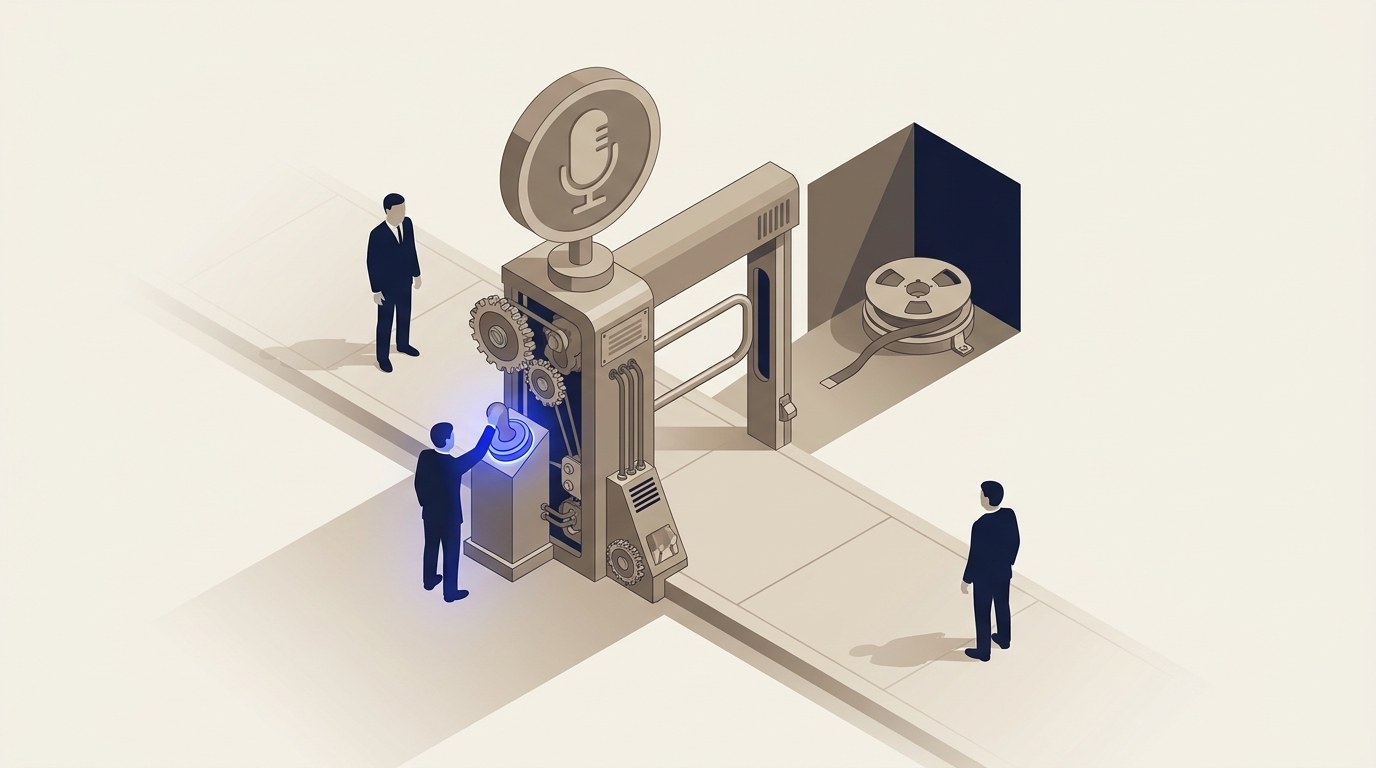
- Recording starts, gated by consentThe platform joins as a bot or captures from the desktop, and depending on how the account is configured, either notifies the other party, asks them to acknowledge, or requires an explicit yes before the recording proceeds at all.
- Transcription runs in near real timeThe audio is converted to a speaker-separated transcript as the call happens or shortly after, depending on the platform.
- Trackers fire against the transcriptA keyword tracker catches the prospect naming a specific competitor. An AI tracker catches a soft objection to price, phrased as "we'd need to see this pay for itself fast," without the word "price" or "discount" appearing.
- Interaction metrics are scoredThe call comes back at a 51% talk ratio for the rep, above Gong's own 43% benchmark for the highest-converting calls, and one monologue ran 3 minutes 40 seconds, past the 2:30 recommended cap.
- The output routes to two placesA coaching clip of the long monologue goes to the rep's manager. A summary, the competitor mention, and a drafted next step get written to the CRM record, so the next rep who opens the deal doesn't start from zero.
Nowhere in that sequence does the software decide what to say next or send anything to the prospect on its own. It flags, scores and drafts; a person reads the flag, approves the draft, and decides what happens on the next call.
What do you have to tell the prospect?
You're recording someone else's voice, so the honest baseline is: tell them before the call, or make sure the platform tells them, and give them a real way to say no. Every vendor in this piece has built that into the product rather than leaving it as a policy line nobody enforces:
| Vendor | What its own documentation describes |
|---|---|
| Gong | Consent profiles configurable per team or region, including a hosted consent page, an audio prompt, and a pre-call reminder email; teams can choose between an opt-out policy or a policy requiring explicit consent before recording |
| Avoma | Four enforcement levels: recording disabled, participants notified only, acknowledgment required, or permission required, where a decline auto-disables recording for that call |
| HubSpot Notetaker | An explicit-consent toggle that, when enabled, emails every participant before the meeting; if anyone doesn't consent, or doesn't respond, the meeting is not recorded |
| Pipedrive Nova | Three levels: no notification, an email alert with the option to opt out before the meeting, and a mode requiring explicit consent or decline before recording proceeds |
Where you record from also changes which country's consent rules apply, and one-party versus two-party consent law varies by state and country, which is a legal question for your own counsel rather than something a vendor's feature list settles for you. That's the one sentence this page spends on the legal side of it; the rest is what the products themselves do.
Common mistakes
- Buying "conversation intelligence" when the actual need is a recorded transcript. If nobody on the team is going to act on trackers, talk-ratio scoring or deal-risk flags, the analysis layer is a cost with no job attached, and a plain recording and transcription tool covers the real requirement for less. See call recording software for sales for that comparison specifically.
- Turning on AI trackers without checking the usage model. Gong's own documentation is explicit that AI trackers run on a separate credit-based usage model from keyword trackers. A team that builds a dozen AI trackers and doesn't watch the credit consumption can end up rationing exactly the feature that made the platform worth buying.
- Treating talk ratio as a target to hit rather than a diagnostic. Gong's own guidance frames 43% as the ratio behind the highest-converting calls in aggregate, not a rule that every call should land there; a demo-stage call and a discovery-stage call will naturally split time differently, and coaching a rep to hit a fixed number regardless of call type optimizes the metric instead of the conversation.
- Assuming the CRM write-back replaces the CRM's own required fields. A drafted summary and action items are a head start, not a substitute for the fields your pipeline stages and forecast actually run on. See revenue operations KPIs your CRM cannot calculate for what still has to be entered by hand or enforced by a workflow rule regardless of how good the call summary is.
- Skipping the consent setting because the default is "off." Every platform in the table above ships a consent mechanism, but none of them turn on the strictest setting by default. Checking the setting once, rather than assuming the vendor's default matches what your legal team expects, is a five-minute task that avoids a much longer conversation later.
Related terms
- Call recording: the layer conversation intelligence sits on top of. Compared tool by tool in call recording software for sales.
- Talk ratio: the share of a call's airtime a rep uses, one of the interaction metrics described above.
- Keyword tracker vs AI tracker: an exact-phrase match versus a concept match that catches paraphrasing, per Gong's own taxonomy above.
- Revenue operations: the reporting layer conversation intelligence data usually feeds. See what is revenue operations.
- CRM hygiene: what keeps the fields conversation intelligence writes back from going stale. See CRM hygiene: measure your decay rate.
Sources
Gong Help Center, Understanding trackers (2026)
Gong Help Center, Analyze team performance (2026)
Gong Help Center, Intro to Insights (2026)
All 10 sources and how they were checked
Avoma, Pricing (2026)
HubSpot, HubSpot Product and Services Catalog (2026)
HubSpot Knowledge Base, Record and take notes in meetings with meeting Notetaker (2026)
Pipedrive Support, Nova for Meetings (2026)
Salesloft Newsroom, Clari and Salesloft Complete Merger and Appoint Steve Cox as CEO (2025)
Salesloft, Conversation Intelligence Software (2026)
ZoomInfo, Chorus by ZoomInfo (2026)
Every figure above is quoted or summarized directly from the vendor's own documentation or pricing pages, fetched on 29 September 2026. Gong, Salesloft Conversation Intelligence and ZoomInfo Chorus don't publish pricing; that's reported here as a finding, not an oversight. Avoma's base-tier prices and its Conversation Intelligence add-on price are read directly from its pricing page as of the fetch date and are subject to change without this post being updated in real time. HubSpot's pricing pages didn't render a specific dollar figure for the conversation intelligence line item on the pages checked; the feature description and tier gating above come from HubSpot's own product catalog and knowledge base instead. Gong, HubSpot, Pipedrive, Avoma, Salesloft, Clari and ZoomInfo names and marks are trademarks of their respective owners; Salestruct isn't affiliated with any of them.
Common questions
If your team already pays for a conversation intelligence platform and nobody can say what the trackers actually changed last quarter, that's usually a sign the tool was bought before the process it's supposed to feed was defined.
If you want a second pair of eyes on your own setup, Salestruct runs a free diagnostic.
Where Salestruct fits
You can set up most of what’s described here yourself, and if someone on your team enjoys the tooling, they probably should.
It’s worth bringing someone in when the tools are bought but not wired together, or the AI has nothing clean to work from. That’s the work Salestruct does: we build the stack around your CRM in your own accounts, and a person approves anything that reaches a prospect. A build usually takes 4–8 weeks. It starts with a free 60-minute diagnostic, where we agree on what’s actually broken before anything gets built.
Read next.
All articlesRevenue operations KPIs your CRM cannot calculate
Most RevOps KPI lists mix three different kinds of number: ones the CRM computes for you, ones it can compute once you add a field, and ones it will never hold the data for. Nobody labels which is which, so teams build dashboards on numbers the system was never able to produce.
What is revenue operations? RevOps explained
RevOps is what happens when marketing, sales and customer success stop reporting from three different spreadsheets. What it owns, how it differs from sales ops, and the signs a company needs one before it has the headcount to hire one.